Ropinirole
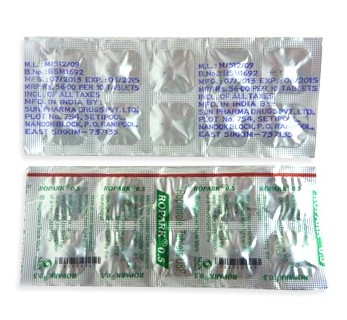
Ropinirole
- In our pharmacy, you can buy ropinirole without a prescription, with delivery in 5–14 days throughout the United Kingdom. Discreet and anonymous packaging.
- Ropinirole is intended for the treatment of Parkinson’s disease and Restless Legs Syndrome (RLS). The drug acts as a non-ergoline dopamine agonist, binding selectively to D2 and D3 dopamine receptors.
- The usual dose of ropinirole varies based on the condition; for Parkinson’s disease, starting at 0.25 mg three times daily or 2 mg once daily for extended-release; for RLS, 0.25 mg once daily.
- The form of administration is a tablet, available in both immediate-release and extended-release forms.
- The effect of the medication begins within 1-2 hours.
- The duration of action is generally around 24 hours for extended-release formulations.
- Limit alcohol consumption while taking this medication.
- The most common side effect is nausea.
- Would you like to try ropinirole without a prescription?
Ropinirole



Basic Ropinirole Information
International Nonproprietary Name (INN): Ropinirole
Key Brand Names & Regional Packaging:
| Brand Name | Country/Region | Packaging/Form | Manufacturer/Supplier |
|---|---|---|---|
| Requip | USA, UK, Global | Tablets, Extended-Release | GlaxoSmithKline, generic versions |
| Requip Modutab | EU | Prolonged-release tabs | GSK |
| Ropinirolum | Eastern Europe | Tablets | Local suppliers |
| Adartrel | Some EU states | Tablets | GlaxoSmithKline |
ATC Code: N04BC04
Drug Class: Non-ergoline dopamine agonist; nonergot-derivative dopamine receptor agonist.
Forms & Dosages Sold: Immediate-release tablets: 0.25 mg, 0.5 mg, 1 mg, 2 mg, 3 mg, 4 mg, 5 mg. Extended-release tablets: 2 mg, 4 mg, 8 mg, 12 mg.
Everyday Use & Best Practices
Choosing the right dosing schedule for ropinirole can make a significant difference in managing symptoms effectively. Many patients tend to prefer morning dosing, which is thought to help maintain alertness throughout the day. Conversely, evening dosing may be preferred by others, particularly those dealing with Restless Legs Syndrome (RLS), as it can facilitate a more restful night's sleep. Observations from UK practices indicate a general trend towards balancing these preferences, with some patients adjusting their intake based on their symptoms and lifestyle. It's crucial to remember that the effectiveness of medication can vary based on the dosing time, so consulting with a healthcare professional about the best time for individual needs is advisable.
Taking With or Without Meals (UK Diet Habits)
Food intake can influence the absorption and overall efficacy of ropinirole. It is generally recommended to take this medication without food for optimal absorption; however, some patients in the UK report taking it alongside meals to mitigate side effects such as nausea. The key is to establish a routine. Consider the following tips:
- Avoid taking ropinirole with high-fat meals, which may slow down the medication's absorption.
- If nausea is a concern, a light snack may help while still allowing adequate absorption but make sure to keep it simple and not overly rich.
- Typical UK meal patterns suggest that breakfast, lunch, and dinner timings could align well with dosing, aiming to avoid large gaps between meals and medication.
In conclusion, being mindful of meal timing when taking ropinirole can enhance its effectiveness while reducing discomfort. As always, patients should stay in dialogue with their healthcare providers to tailor these guidelines to their individual needs.
What’s Inside & How It Works
When it comes to medications, understanding what's inside them is key for safe usage. Ropinirole, the active ingredient in tablets often branded as Requip or Adartrel, plays a crucial role in treating conditions like Parkinson’s disease and Restless Legs Syndrome (RLS). The formulation may also include inactive ingredients that ensure the tablet holds together and aids absorption, all while adhering to health and safety standards. Patients should always be aware of these components, as some may trigger reactions in those with specific allergies or sensitivities.
Ingredients overview
Ropinirole primarily acts as a dopamine agonist. This means it works on dopamine receptors in the brain, mimicking the effects of naturally occurring dopamine, which is vital for controlling movement and coordination. Inactive ingredients typically involve binders and fillers that assist in the tablet's stability and effectiveness, although they contribute little to the therapeutic effect. Ensuring health and safety is paramount; thus, any known allergens or side effects should be discussed with healthcare providers. Remember, it’s advisable to consult a pharmacist or doctor if there are any concerns regarding the tablet's composition.
Mechanism basics explained simply
Ropinirole works wonders in the brain by acting as a dopamine agonist. This means it stimulates dopamine receptors, particularly D2 and D3 types, which are essential for controlling movement. In conditions like Parkinson’s disease, where dopamine levels are typically low, ropinirole helps to replenish the deficiency. Think of it as a friendly helper that makes communication between brain cells smoother, enhancing movement and reducing symptoms like tremors. Users often notice improvements in their ability to carry out daily activities as the medication kicks in and stabilises their symptoms.
Main Indications
When it comes to approved uses, ropinirole is a game-changer, especially for patients grappling with Parkinson's disease and Restless Legs Syndrome, as outlined by the MHRA. These approved applications underline its effectiveness in relieving symptoms and improving quality of life. Research consistently backs these indications, confirming ropinirole's role as a frontline treatment option.
Approved uses
- Parkinson’s disease
- Restless Legs Syndrome (RLS)
However, the story doesn’t end there. In UK clinics, many healthcare practitioners may also prescribe ropinirole for off-label uses like severe gastrointestinal issues or as an adjunct therapy in restless leg syndrome management. Patients may find discussions around these uses enlightening, as they can impact their treatment approach. It's always best to engage with healthcare providers for comprehensive insights into why a specific medication is being prescribed beyond its usual scope.
Interaction Warnings
Understanding drug interactions is essential for anyone taking ropinirole. While it's effective, it can interact with certain foods and medications, which can affect how it works. For example, alcohol consumption can lead to increased side effects related to dizziness or drowsiness, while caffeinated drinks might diminish the medication's efficacy. Patients should consider avoiding these combinations to ensure optimal treatment outcomes.
Food interactions (alcohol, tea/coffee)
The relationship between ropinirole and dietary choices can be significant. Alcohol may enhance the sedative effects of the medication, leading to increased risks of dizziness or drowsiness. In contrast, beverages like tea or coffee, being stimulants, may counteract some of the therapeutic benefits, complicating treatment. Patients should aim to keep their intake of these substances minimal and consult healthcare professionals for tailored advice.
Drug conflicts
Reports to the MHRA Yellow Card scheme have highlighted various drug interactions with ropinirole, demonstrating the importance of monitoring such relationships. Common culprits that may interfere with its efficacy or heighten adverse effects include other anti-parkinsonian drugs, certain antidepressants, or antipsychotics. Healthcare providers encourage patients to share all medications they are on—prescription or over-the-counter—to better navigate potential conflicts and tailor the best treatment plan.
Latest Evidence & Insights
Numerous recent studies have shed light on the ongoing efficacy and safety surrounding ropinirole in the UK and EU from 2022 to 2025. These findings often emphasise the drug’s ability to manage symptoms effectively while maintaining a favourable safety profile. As new evidence emerges, there may be shifts in prescribing practices, aiming to optimise treatment strategies for patients. It’s always beneficial for patients to stay informed about the latest research and engage openly with their healthcare providers about its implications.
Key UK & EU studies 2022–2025
Recent investigations highlight several key aspects surrounding ropinirole: - The ongoing assessment of its long-term use and safety. - The exploration of its effectiveness across diverse patient demographics. - Insights into patient experiences and satisfaction, often revealing valuable feedback. Keeping abreast of these developments is vital, as they can impact the broader understanding of ropinirole's role in managing Parkinson’s disease and RLS.
Alternative Choices
Patients often seek alternatives to their prescribed medications, particularly when considering conditions like Parkinson’s disease and Restless Legs Syndrome (RLS). The NHS offers a range of alternative medications with varying benefits and drawbacks. Here's a look at a few options for ropinirole:
NHS prescribing alternatives with pros/cons checklist
- Pramipexole
- Pros: Similar efficacy to ropinirole and may have a lower side effect profile for some users.
- Cons: May cause excessive drowsiness, particularly in elderly patients.
- Rotigotine
- Pros: Available as a transdermal patch, which can be more convenient for patients who have difficulty swallowing tablets.
- Cons: Skin reactions at application site can occur, which may deter some patients.
- Levodopa/Carbidopa
- Pros: Established first-line treatment for Parkinson’s with a long history of use.
- Cons: Long-term use may lead to motor fluctuations and dyskinesias.
Regulation Snapshot
Understanding the regulatory environment surrounding ropinirole is crucial for both patients and healthcare providers.
MHRA approval & NHS prescribing framework
The UK’s Medicines and Healthcare products Regulatory Agency (MHRA) has approved ropinirole for both Parkinson’s disease and primary moderate-to-severe RLS. The medication is included in the NHS formulary, which provides guidelines on the prescribing of ropinirole for appropriate patients. Essential points include:
- Ropinirole is available only via prescription, reflecting its potential side effects and need for medical oversight.
- The NHS formulary recommends dose titration based on patient response, crucial for optimising therapy.
- Healthcare providers must assess contraindications, particularly with cardiovascular or psychiatric history, to ensure safe prescribing.
FAQ Section
When considering a new medication, common questions arise. Here are answers to some frequent queries about ropinirole:
3–4 common UK patient questions
- Can Ropinirole cause weight gain? While some patients report weight changes, the evidence is mixed. Regular monitoring is advised.
- Can you drink alcohol with Ropinirole? Alcohol should generally be avoided as it can enhance the sedative effects of the medication.
- What is the maximum dose of ropinirole for restless legs? The dose for RLS typically should not exceed 4 mg per day.
- Is ropinirole addictive? Ropinirole isn’t classified as addictive, but caution is necessary as it can lead to impulse control disorders in some individuals.
Guidelines for Proper Use
For optimal treatment outcomes, proper usage of ropinirole is essential. Pharmacists play a key role in patient education regarding its use.
UK pharmacist counselling style
Pharmacists often share these key counselling points:
- Adherence to prescribed dosing is vital; if a dose is missed, skip it; don’t double up.
- Monitor for side effects, especially dizziness or sudden sleep onset, and report them to a healthcare provider.
- Gradually increasing dosage as per instructions ensures better tolerance.
NHS patient support advice
For ongoing support in managing conditions treated with ropinirole, patients can access:
- The NHS website offers comprehensive information on medication and condition management.
- Local support groups can provide community support and shared experiences.
- Consulting with healthcare professionals for personalised advice is always recommended.
Delivery Information
| City | Region | Delivery Time |
|---|---|---|
| London | Greater London | 5–7 days |
| Birmingham | West Midlands | 5–7 days |
| Manchester | North West | 5–7 days |
| Glasgow | Scotland | 5–7 days |
| Bristol | South West | 5–7 days |
| Leeds | Yorkshire | 5–7 days |
| Sheffield | Yorkshire | 5–7 days |
| Newcastle | North East | 5–7 days |
| Cardiff | Wales | 5–9 days |
| Coventry | West Midlands | 5–9 days |
| Nottingham | East Midlands | 5–9 days |
| Southampton | South East | 5–9 days |